

Xjentisti Ċelloli testikolari tal-bniedem stampati 3D
Mar 18, 2022
Ħalli messaġġ
Ix-xjentisti fil-Kanada British Columbia (UBC) jużaw teknoloġija 3D biex jistampaw ċelluli testikolari umani u jsibu li għandhom is-sinjali bikrija tal-isperma biex jipproduċu l-isperma, li hija l-ewwel darba fid-dinja. It-tim ta' riċerka ta' Dr Ryan Flannigan, Assistent Professur tal-Assistent tal-Uroloġija tal-UBC, għandu ġurnata-, li tipprovdi soluzzjoni għal pazjenti li bħalissa ma jistgħux jittrattaw.
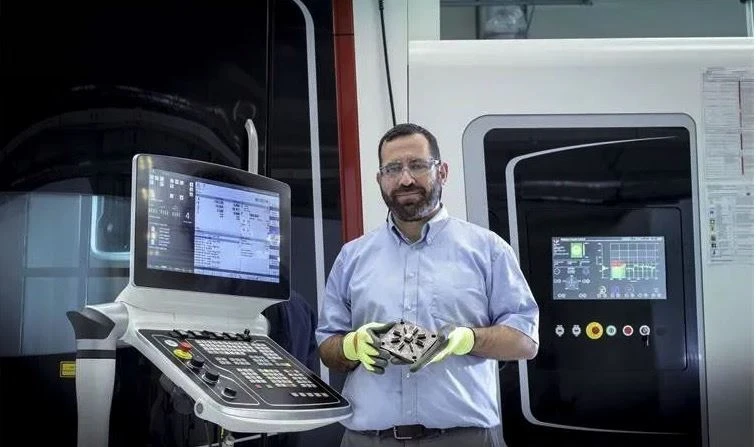
"15 percent of the couple suffer from infertility, at least half of them is caused by male factors." Flannigan said its laboratory established a Vancouver's prostate center in Vancouver General Hospital. We are printing testicular cells into a special structure that imitates the human anatomy with 3D printing technology, which we believe this is the best way to stimulate sperm generation. "Flannigan said, if success, this will open the new birth treatment door for those who have no other choice.
Fit-testikoli umani, l-isperma hija prodotta minn tubu żgħir imsejjaħ tubu fin. Fl-infertilità maskili l-aktar severa-mhux-ostruttiva mhux-marda ta' l-isperma (NOA), l-isperma tinsab fl-eġakulazzjoni minħabba t-tnaqqis fl-isperma prodotta minn dawn l-istrutturi ta' tubi żgħar. Għalkemm f'xi każijiet, it-tabib jista 'jgħin lill-pazjenti NOA jsibu sperma estremament rari permezz ta' kirurġija, iżda Flannigan qal biss nofs ir-rata ta 'suċċess.
"Unfortunately, for the other half of patients, they have no choices, because we can't find sperm for them." Flannigan said, these is the patient who wants to help. In recent studies, researchers conducted biopsy for testis of NOA patients and collected stem cells. These cells were then cultured, and 3D was printed into a hollow tubular structure on the petri dish, similar to the fine elipes capable of producing sperm.
After 12 days, the research team found that these cells did not only survive, but also growing several special cells participating in sperm production, and there was significant improvements in the maintenance of stem cells - this is the early signs of sperm production capacity. The results of this study were recently published in "Plastic and Infertility Science".
"These cells survive and start differentiation, which is a huge milestone. Although there is still a long way to go, this makes our team full of hope." Flannigan said.
The team is currently committed to the "training" cells producing sperm. In order to do this, they exposed cells in different nutrients and growth factors, and fine-tuned their structural arrangements to promote interaction between cells. If these cells can produce sperm, these sperm may pass through in vitro fertilization Make the egg fertilization and provide a new birth treatment option for the couple.
Il-proġett ta 'riċerka jiżvela wkoll il-mekkaniżmi ġenetiċi u molekulari li jwasslu għal NOA. It-tim Flannigan ilu juża varjetà ta' tekniki ta' sekwenzar ta'-ċellula waħda biex jifhem l-espressjoni tal-ġeni u l-karatteristiċi ta' kull ċellula, u mbagħad jikkalkula l-mudell biex jifhem aħjar il-kawża ewlenija tal-marda u jiddetermina pjan ġdid ta' trattament. Dan ix-xogħol jeħtieġ ukoll kollaborazzjoni għolja, li tinvolvi riċerkaturi tal-UBC fix-xjenza tal-kompjuter, il-matematika u l-inġinerija, u kooperazzjoni internazzjonali oħra.
"We are increasingly learned that infertility may have many different reasons, and every case varies from person to person." Flannigan said, "Considering this, we are taking a personalization, precise Medical Methods - Extracting the cells from the patient, trying to understand its unique abnormal conditions, and then supported by 3D printing to overcome these original defects. "